
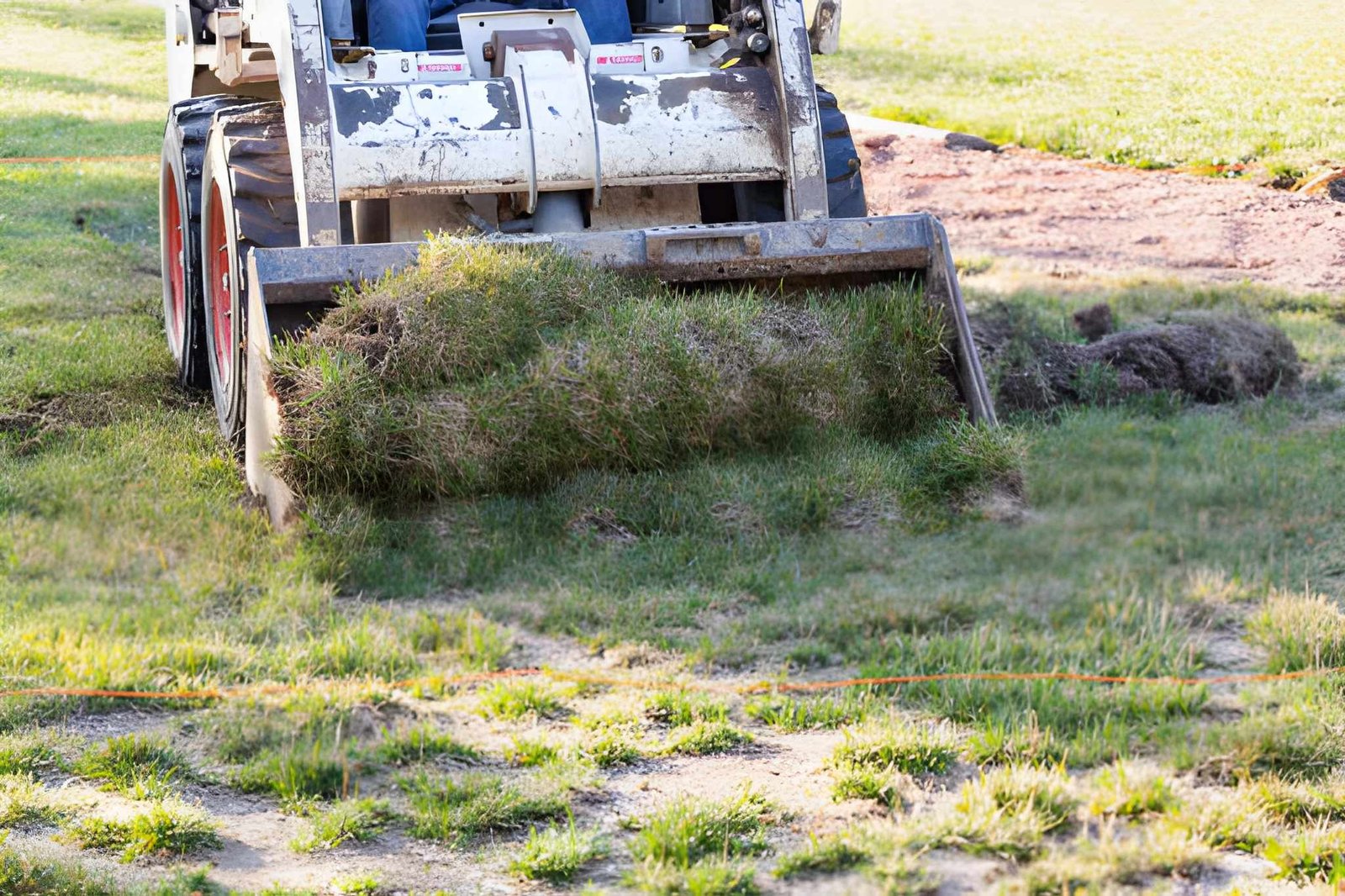
Water direction
The grade should move runoff away from the house and out of high-use areas without creating a new low spot. Downspouts, neighboring slopes, patios, driveways, and lawn edges all affect the route water can take.
Grading
Reshape a rough, uneven, or poorly draining yard so it works better, looks cleaner, and supports the next improvement.
Why homeowners choose Grading
A small change in elevation can decide whether water moves away from the home or sits where people want to walk, mow, or relax. Grading turns rough ground into a workable outdoor plan.
Grading is one of the most important parts of an outdoor project because it affects drainage, comfort, and durability. A patio, pool deck, slab, or lawn area can look right at first but struggle later if water has nowhere to go.
Slaymaker Landscaping looks at how the grade meets the home, driveway, walkways, neighboring surfaces, and low points in the yard. That bigger view helps the team decide whether the site needs soil moved, low areas filled, high areas cut down, or a more complete drainage plan.
Grading can be a stand-alone service, but it is also a smart step before concrete, hardscaping, excavation, pool installation, or landscape renovation. When the grade is right, the finished work has a stronger base.
Best uses
Homeowners often notice grading issues as puddles, soggy turf, washed mulch, leaning surfaces, difficult mowing, or water running toward the house. These signs can show up after heavy rain, new construction, old settling, or years of small changes around the property.
The solution may be subtle or significant. Some areas need final shaping and topsoil. Others need excavation, drainage routing, or a hardscape plan that changes how the slope is used. The right answer depends on the property and the finished goal.
Slaymaker Landscaping connects grading with the other work that often follows it. That helps a new patio, pool area, driveway extension, or lawn improvement sit at the right elevation from the start.
Process
Grading work focuses on pitch, low spots, usable transitions, and the route water should take after the next heavy rain.
Slope, runoff, and use
Grading is not just smoothing soil. The plan should explain where water should move, how the yard should feel underfoot, and how the prepared area supports the next outdoor improvement.
The grade should move runoff away from the house and out of high-use areas without creating a new low spot. Downspouts, neighboring slopes, patios, driveways, and lawn edges all affect the route water can take.
Good grading makes mowing, walking, and outdoor use easier. The crew should look at trip points, steep changes, driveway and walkway edges, and how new soil will meet existing lawn or hardscape surfaces.
If a pool, patio, slab, wall, or drainage repair is planned, grading should be tied to those elevations. That avoids reshaping the same area twice and gives the finished project a stronger base.
Grading questions
If water stands after rain, runs toward the house, washes out beds, or leaves the lawn uneven and hard to use, grading should be reviewed.
Yes. Grading can redirect water when the site has enough elevation to move it. Some properties also need drain routing or excavation.
Yes. Concrete flat work should be planned after the surrounding grade and water path are understood.
Yes. Pool projects often need grading for access, excavation support, surrounding deck areas, and final drainage.
Share photos, the location of low areas, where water currently flows, and what you want to use the space for after the work is complete.
Start with what you want
Tell Slaymaker Landscaping what you want to build or fix and how you hope the finished space will work for you.
Include the service, ZIP code, timing, photos, and what should improve when the work is complete.