
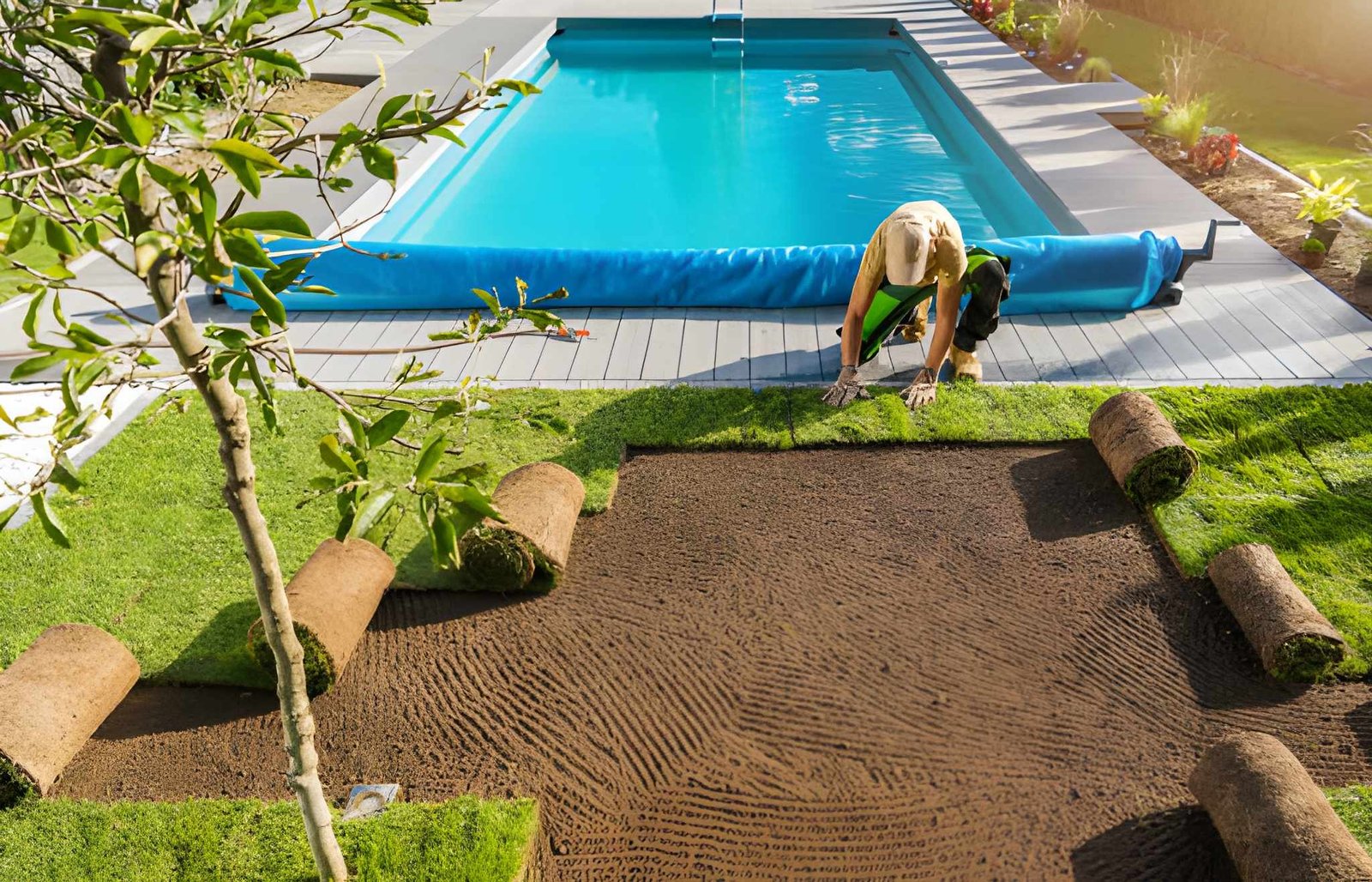
Soil contact
A smooth prepared surface helps roots reach soil consistently instead of bridging over clods, ruts, or debris.
Sod installation
Trade bare soil, damaged lawn, or a rough construction finish for a clean green yard you can enjoy sooner.
Why homeowners choose Sod installation
New turf follows the surface beneath it. Low spots, compacted construction soil, debris, poor transitions, and unresolved runoff can remain visible after sod is placed, so the ground is reviewed and prepared before installation.
The installation area needs a smooth, firm soil surface at the correct elevation. Existing weeds, damaged turf, stones, construction debris, and high or low areas may need to be removed or corrected so the sod makes consistent contact.
Edges at sidewalks, patios, pool decks, beds, and curbs are set so the new lawn meets them cleanly without sitting too high. Surface pitch should continue to move water in the intended direction after those transitions are finished.
Once installed, the sod needs prompt and consistent moisture while roots begin moving into the soil. The homeowner’s watering access, seasonal conditions, and the size of the area should be discussed before scheduling.
Best uses
Sod is useful when homeowners want a usable, uniform lawn sooner than a seed-only approach, especially around newly completed pool, hardscape, concrete, drainage, or grading projects.
It can also refresh worn lawn sections when the underlying cause has been addressed. Traffic, shade, runoff, soil compaction, and irrigation coverage should be considered so the new turf is not placed into the same unresolved condition.
Coordinating sod with the preceding site work allows rough areas, equipment routes, and finish grades to be restored as part of one project sequence.
Process
Sod installation depends on a smooth prepared soil surface, correct edge elevations, full soil contact, and consistent early watering.
Soil, grade, and watering
A sod estimate should account for removal, soil preparation, access, edge elevations, watering logistics, and the condition the lawn needs to recover from.
A smooth prepared surface helps roots reach soil consistently instead of bridging over clods, ruts, or debris.
Sod thickness is considered at walks, patios, beds, and drains so edges remain clean and usable.
New sod requires consistent moisture during establishment; the exact schedule should respond to weather and site conditions.
Sod installation questions
Yes. Removal, smoothing, soil contact, finish grade, and clean edges all affect how the installed turf looks and establishes.
Watering should begin promptly after installation and remain consistent during establishment, adjusted for weather and site conditions.
Yes. Sod is often the finish step after construction routes and surrounding grades have been repaired.
No. Drainage or grade issues should be addressed before new turf is installed over the area.
Start with what you want
Tell Slaymaker Landscaping what you want to build or fix and how you hope the finished space will work for you.
Include the service, ZIP code, timing, photos, and what should improve when the work is complete.