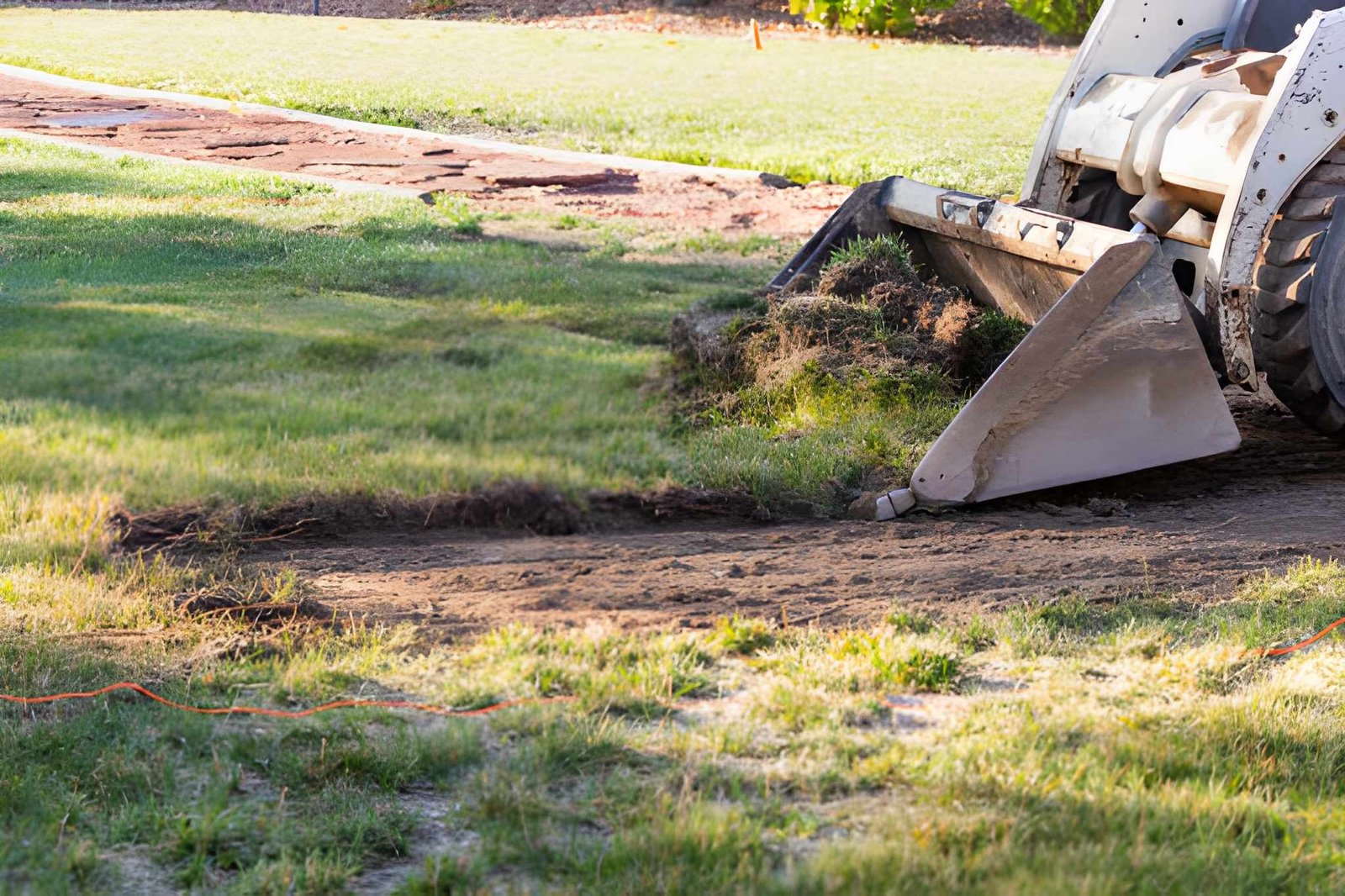
Drainage work is not one-size-fits-all. Downspout discharge, low spots, clay soil, slope changes, compacted areas, and hardscape edges can all contribute to the same visible problem.
Water usually follows the easiest path, even when that path crosses a patio, collects near the home, or leaves the lawn too soft to enjoy. A lasting drainage plan starts by looking at where the water begins, where it should go, and what is stopping it from moving there now.
In Eastern Iowa, heavy rain and freeze-thaw movement can expose weak grades quickly. A slight low spot may become a muddy patch, and a hardscape edge without a discharge plan may trap water in the wrong place. Slaymaker Landscaping reviews those conditions before recommending drains, grading, swales, or other improvements.
Because drainage often overlaps with excavation, grading, concrete, and hardscaping, the team can plan the fix around the full outdoor space. That matters when a homeowner is also planning a patio, pool, retaining wall, or new lawn area.
The best drainage recommendations are specific to the way the property behaves after rain. A wet strip along a walkway may have a different cause than a low lawn, a washed-out bed, or water collecting behind a wall. Slaymaker Landscaping looks for that cause before suggesting a repair so the work solves more than the visible puddle.