
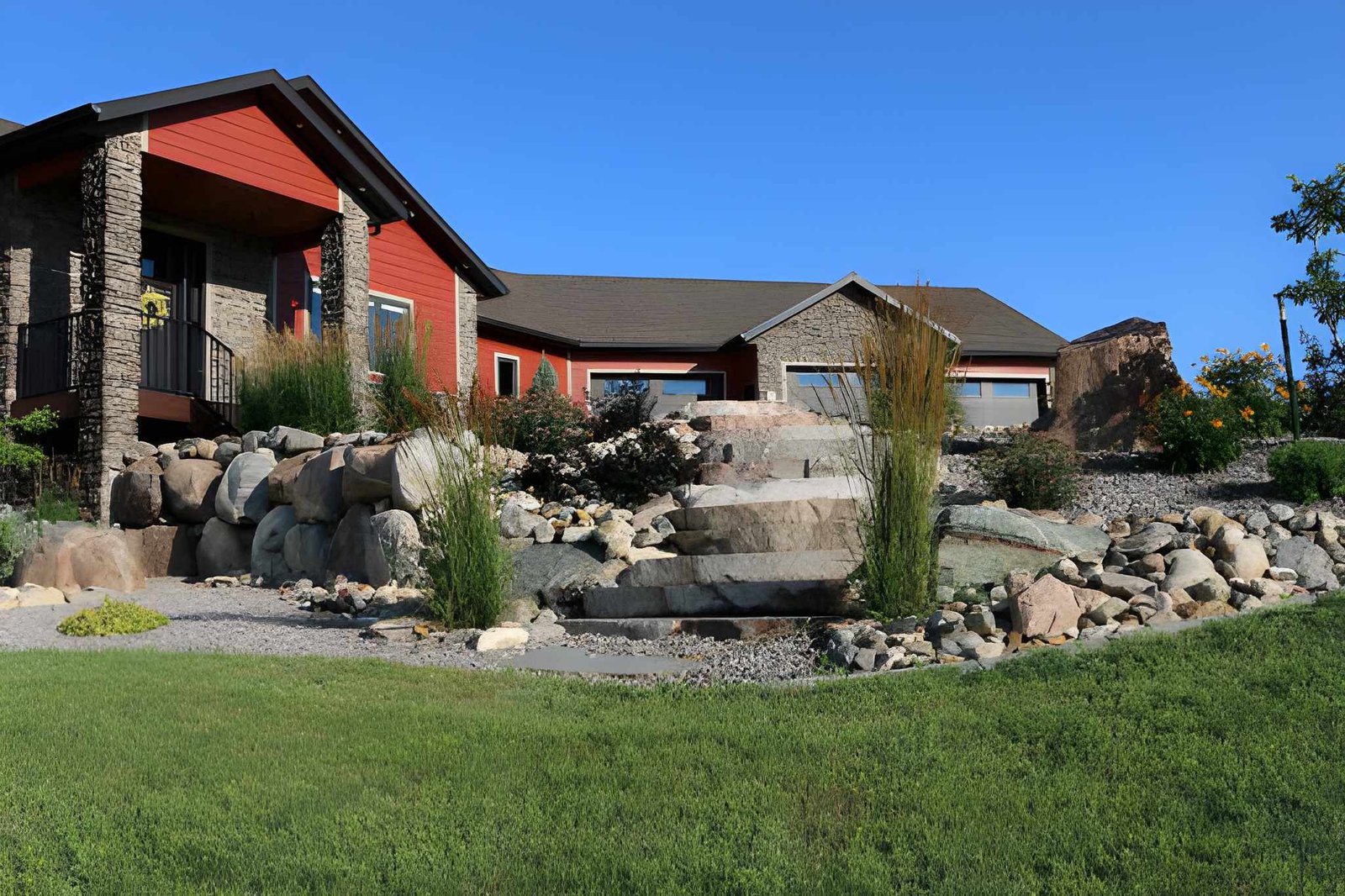
Restore positive movement
Regrading or a shallow swale may help when water can continue across the surface to an appropriate low point.
Exterior water management
Give rainwater a deliberate route through the yard before it settles into a soft lawn, washes out soil, or crosses the outdoor spaces you use.
Marion stormwater context
Marion’s public stormwater network includes storm intakes, storm-sewer pipe, drainageways, culverts, and detention basins. The city is evaluating those connected pieces through its Stormwater Master Plan. At the property level, the same connected thinking matters: roof water, lawn pitch, patios, walks, walls, and low areas all influence where runoff travels next.
Slaymaker Landscaping reviews exterior water movement at the scale of the whole work area. The goal is to find the source, understand what interrupts the route, and identify an outlet that fits the property and the surrounding drainage pattern.
Looking for plumbing help? Indoor drain clogs, sewer backups, septic issues, and emergency drain cleaning are different services. Slaymaker’s drainage work focuses on outdoor runoff, yard grade, and landscape drainage.
Follow the full rain path
The visible low spot is one clue. A lasting recommendation also accounts for where the water begins and where it can safely continue.
Source
Downspouts, higher lawn, rainfall across compacted soil, and runoff from hard surfaces can each feed the same wet area.
Route
Settled grade, walks, patio edges, retaining walls, fences, and narrow side yards may block, concentrate, or redirect the flow.
Outlet
The plan needs enough fall and a workable release point without simply shifting the same problem to another part of the yard.
Choose by cause, not by product
A shallow low area with a usable downhill route may point toward surface reshaping. Concentrated roof runoff or water trapped behind a hard edge may need collection and a defined path. Some properties need both approaches, followed by finish grading and lawn restoration.
Slaymaker can coordinate grading and excavation when the drainage scope requires earthwork. Existing water patterns should also be addressed before the final elevations are set for a hardscape, pool, or concrete surface.
Regrading or a shallow swale may help when water can continue across the surface to an appropriate low point.
Catchment or subsurface drainage may be considered where water gathers at a defined point or cannot cross a surface.
Grade, collection, conveyance, outlet protection, and restoration may need to work together when several conditions overlap.
A site-specific estimate
Two yards with similar puddles can need very different work. The estimate becomes useful when it accounts for the full route and the work required to leave the area finished.
Roof discharge, neighboring grade, hard surfaces, and rainfall across the lawn can concentrate water in different ways.
Gate width, fences, planted areas, pavement, and the distance to the work zone affect how soil and materials can move.
The available fall, release point, route length, and need for surface or subsurface components shape the drainage plan.
Disturbed lawn, planting beds, patio edges, or other finished surfaces should be accounted for as part of the project scope.
Useful after the next rain
Scope and upkeep
Access affects how a drainage project is built. Gates, fences, planted beds, existing pavement, and the distance from the street to the low area all shape excavation and restoration. The estimate should identify the work limits, materials or earthwork involved, the intended outlet, and how disturbed areas will be finished.
After installation, visible inlets and outlets should remain clear. The route should also be checked after heavy rain for settlement, erosion, or debris. If work could affect a recorded easement, public intake, drainageway, or storm-sewer connection, current Marion requirements should be confirmed for the property before the scope is finalized.
Marion and nearby guidance
Review the broader service, compare a nearby drainage page, or explore the full set of Iowa service areas before reaching out.
Marion drainage questions
Start with the behavior of the water and the conditions around it. The product comes later.
Slaymaker Landscaping can review standing water, soft lawn areas, erosion, washouts, downspout discharge, runoff crossing patios or walks, and drainage concerns connected to grading or future outdoor construction.
No. Some problems may be addressed through surface grading or a shallow swale, while others may call for collection and subsurface conveyance. The source, slope, soil conditions, available outlet, and surrounding surfaces determine which approach fits.
A residential yard is part of a larger route that may include storm intakes, storm-sewer pipe, drainageways, culverts, and detention basins. Work on the lot should preserve relevant drainage paths and follow current city requirements for any easement, public intake, drainageway, or storm-sewer connection involved.
Cost depends on the cause of the problem, the size and depth of the work area, access, materials, the available outlet, and the amount of lawn or hardscape restoration needed. A site-specific estimate is the reliable way to price the work.
Keep visible inlets and outlets clear, watch for soil settlement or erosion, and check the area after heavy rain. Maintenance needs depend on the system used and should be reviewed with the completed scope.
No. This page covers yard runoff, surface grade, downspout discharge, and exterior landscape drainage. Indoor plumbing clogs, sewer backups, and emergency drain cleaning require the appropriate plumbing or sewer professional.
Start with the wet-weather pattern
Share the address, wide photos during or just after rain, the low point, nearby downspouts, and any patio, wall, pool, concrete, or lawn work planned for the same area.
The project scope and price can then be based on the source, route, outlet, access, and restoration involved.